Most travelers who dream of Nepal picture the same iconic images: Everest's summit piercing the clouds, prayer flags fluttering at ancient monasteries, trekkers navigating narrow mountain paths. These images aren't wrong, but they're incomplete. Beyond the well-trodden routes to Everest Base Camp and Annapurna Circuit lies another Nepal—one of crystalline alpine lakes reflecting snow-capped peaks, remote valleys where time seems suspended, and sacred landscapes that have drawn pilgrims for millennia. These hidden sanctuaries tell stories that the famous peaks cannot, stories of spiritual devotion, ecological wonder, and cultural richness that define the soul of the Himalayas.
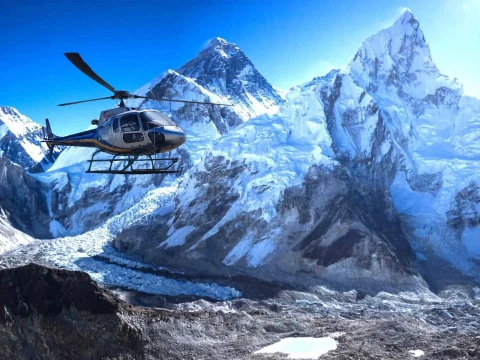
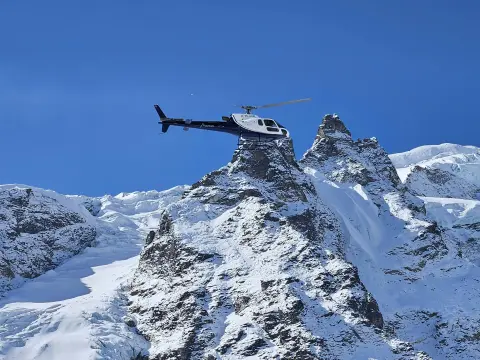
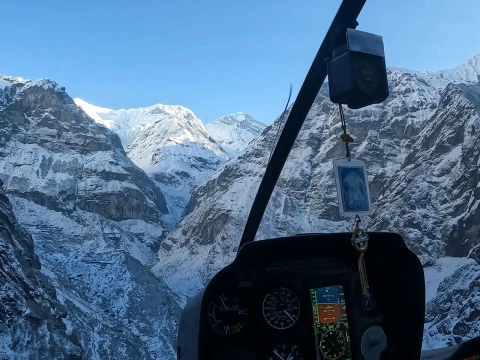
Getting to these remote locations used to require weeks of trekking through challenging terrain. Some destinations remained accessible only to the most dedicated adventurers or devoted pilgrims willing to undertake arduous journeys. Helicopter access has changed this equation entirely, opening doors to Nepal's most sacred and spectacular hidden corners. Within hours rather than weeks, travelers can now stand beside turquoise lakes at fourteen thousand feet, explore valleys that harbor unique wildlife, and visit temples that have welcomed faithful pilgrims since before recorded history.
This isn't about choosing shortcuts over authentic experiences. Rather, it's about recognizing that Nepal's treasures extend far beyond its most famous landmarks, and that many travelers—whether constrained by time, age, or physical ability—deserve the chance to witness these wonders. The helicopter becomes more than transportation; it transforms into a key that unlocks landscapes and experiences that would otherwise remain forever out of reach.
Everest Base Camp Helicopter Tour | 5 hours days
Heli Tours
The Sacred Geography of Nepal's Hidden Lakes
Nepal's geography creates conditions perfect for high-altitude lakes. Ancient glaciers carved deep valleys, tectonic forces pushed land upward, and centuries of snowmelt filled natural basins with pristine water. These lakes exist at elevations where oxygen grows thin and vegetation sparse, creating landscapes that feel otherworldly. But beyond their physical beauty, many of these water bodies hold profound spiritual significance for Hindu and Buddhist communities.
The concept of sacred geography runs deep in South Asian spirituality. Mountains aren't simply mountains—they're the abodes of gods. Rivers aren't just water—they're goddesses flowing from heaven to earth. Lakes, particularly those at high altitudes, represent liminal spaces where the earthly and divine meet. Pilgrims believe that bathing in these sacred waters washes away sins, that offerings made at their shores reach directly to the divine, that meditation beside their still surfaces brings spiritual clarity impossible to achieve elsewhere.
This sacred dimension transforms what might otherwise be simple scenic destinations into places of genuine pilgrimage. When you visit these lakes by helicopter, you're not just sightseeing—you're participating in spiritual traditions that stretch back thousands of years. Understanding this context enriches the experience immeasurably. You're witnessing something that matters deeply to millions of people, landscapes that have shaped religious practice and spiritual belief across centuries.
The remoteness of these lakes has historically protected them. Unlike more accessible sites that attract mass tourism, these hidden sanctuaries have maintained their pristine character precisely because reaching them required commitment. Now, with helicopter access creating new possibilities, a delicate balance emerges between opening these wonders to more visitors and preserving the quiet sanctity that makes them special. Responsible tourism becomes crucial—visiting with respect, awareness, and minimal impact.
Gosaikunda: Where Myth and Mountains Meet
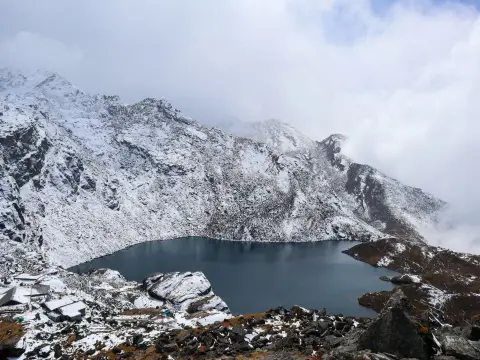
Gosaikunda sits at approximately fourteen thousand three hundred feet in the Langtang National Park, a cluster of alpine lakes that Hindus consider among Nepal's most sacred sites. According to Hindu mythology, when the god Shiva consumed poison that threatened to destroy the universe, the burning sensation in his throat became unbearable. He struck his trident into the mountainside, and from that wound, the Gosaikunda lakes emerged, their cool waters soothing his suffering and saving creation itself.
Every year during the August full moon festival of Janai Purnima, thousands of pilgrims make the trek to Gosaikunda. They come from Nepal, India, and beyond, some walking for a week or more to reach these sacred waters. They bathe in the freezing lake despite the altitude and cold, believing the ritual cleanses karma accumulated over lifetimes. They make offerings, they chant prayers, they circle the lake's perimeter in devotional circumambulation. The atmosphere during festival time transforms from mountain wilderness into open-air temple, with the sounds of bells, drums, and sacred mantras echoing off surrounding peaks.
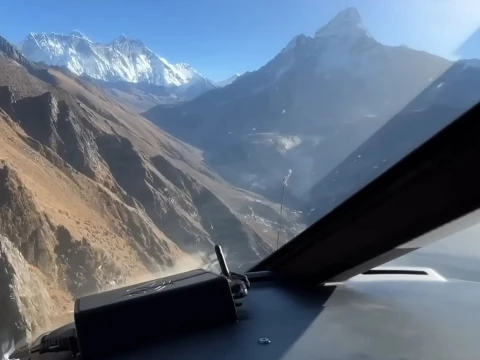
The Gosaikunda helicopter tour reveals this sacred landscape from perspectives that ground-bound pilgrims never experience. As you fly north from Kathmandu, the landscape transitions from urban sprawl to terraced hills, then to dense rhododendron forests, and finally to the alpine zone where vegetation gives way to rock and snow. The flight path follows ancient pilgrimage routes, and on clear days, you can spot trekkers making their way along trails that wind through the mountains like threads connecting devotion to destination.
Approaching Gosaikunda from the air, the lakes appear as jewels set in stone—impossibly blue against gray rock and white snow. The main lake, Gosaikunda itself, stretches largest among the cluster. Surrounding it, smaller lakes—Bhairab Kunda, Saraswati Kunda, and others—create a natural mandala of water and mountain. Each lake holds its own mythological significance, its own stories told by priests and passed down through generations.
Landing near Gosaikunda brings you into direct contact with this spiritual landscape. The thin air makes breathing labored, and cold wind sweeps across the exposed terrain. But there's a profound stillness here, a quality of silence that feels amplified rather than broken by the wind. You might encounter pilgrims even outside festival season—devotees for whom the journey itself constitutes the spiritual practice. Respect becomes paramount. Dress modestly, speak quietly, ask permission before photographing people at their prayers.
The surrounding mountains frame Gosaikunda dramatically. Langtang Lirung dominates the northern horizon, its massive bulk seeming to anchor the earth itself. Ganesh Himal rises to the west, its peaks named for the elephant-headed deity. These mountains aren't backdrop—they're participants in the sacred geography, witnesses to centuries of human devotion played out on their flanks.
The Kyanjin Gompa helicopter tour, though distinct from Gosaikunda, operates in the same Langtang region and can sometimes be combined with lake visits depending on weather and time constraints. Kyanjin Gompa sits in the Langtang Valley proper, a Buddhist monastery surrounded by peaks and glaciers. The valley's U-shape, carved by ancient ice, creates an enclosed sanctuary feel—you're inside the mountains rather than merely looking at them from a distance.
The cultural dimension of Langtang adds layers to the helicopter experience. This region is home to the Tamang people, whose Tibetan Buddhist traditions permeate the landscape. Monasteries perch on hillsides, prayer wheels line village paths, and colorful prayer flags mark sacred spots and mountaintops. The 2015 earthquake devastated Langtang, with the village of Langtang itself essentially destroyed by a massive avalanche. Recovery continues, but the region demonstrates remarkable resilience, with communities rebuilt and tourism returning to support local livelihoods.
Visitors to Kyanjin Gompa encounter yak herders maintaining traditional practices that have sustained mountain communities for centuries. The monastery itself, though damaged in the earthquake, has been restored and continues to serve as a spiritual center for the valley. Monks conduct daily prayers and rituals, maintaining traditions that connect this remote valley to the broader Tibetan Buddhist world. The sound of dungchen (long horns) during morning prayers carries across the valley, mixing with the wind and the occasional call of high-altitude birds.
The wildlife of the Langtang region adds another dimension of wonder. Himalayan tahr, a goat-like ungulate, navigate impossible cliff faces. Red pandas inhabit the rhododendron forests at lower elevations, though spotting these shy creatures requires extraordinary luck. Birds adapted to extreme altitudes—snow pigeons, Himalayan griffons, and even the occasional lammergeier (bearded vulture)—soar on thermals generated by the sun-warmed mountains.
Kyanjin Gompa Helicopter Tour | 2 hours days
Heli Tours
Rara Lake: Nepal's Hidden Blue Jewel
While Gosaikunda draws pilgrims and spiritual seekers, Rara Lake appeals to those who cherish pristine wilderness and ecological wonder. Located in the far northwestern corner of Nepal in Rara National Park, Rara Lake holds the distinction of being Nepal's largest lake. Its deep blue waters stretch nearly three miles long and a mile wide, surrounded by pine and juniper forests with the Himalayan range creating a dramatic backdrop.
The remoteness of Rara cannot be overstated. This isn't a quick day trip from Kathmandu or Pokhara. Even with helicopter access, reaching Rara requires a longer flight that crosses significant distances. But this remoteness is precisely what makes Rara special. The lake has remained remarkably unspoiled by human activity, its waters so clear you can see meters down, its shorelines unmarred by development.
The Rara Lake helicopter tour typically departs from Nepalgunj, a city in the lowland Terai region. Some operators offer direct flights from Kathmandu, though this requires additional fuel stops and significantly more time. The flight path crosses multiple ecological and geographical zones—from the tropical lowlands through the mid-hills and into the high Himalayan zone where Rara sits at nearly ten thousand feet elevation.
This elevation gradient creates dramatic changes visible from the air. You leave behind the heat and humidity of the plains, rising through terraced farmlands where agriculture dominates every available plot. As elevation increases, population density drops. Villages become less frequent, roads more primitive, until eventually the landscape transitions into wilderness. Pine forests cover hillsides, giving way to alpine meadows and finally to the snow-covered peaks that ring the horizon.
Approaching Rara Lake from the air delivers one of Nepal's great visual surprises. The deep blue of the water appears suddenly, a perfect oval set among green forests and gray mountains. The color seems impossibly vivid—more Caribbean lagoon than mountain lake. This extraordinary hue results from the lake's depth (over five hundred fifty feet at its deepest point) and the clarity of its waters, which absorb longer wavelengths of light and reflect back the brilliant blue.
Landing at Rara brings you into a landscape that feels more like North America's Rocky Mountains than the Himalayas of tourist imagination. Pine forests surround the lake, their scent sharp and resinous. The atmosphere feels different from higher-altitude destinations—more oxygen, warmer temperatures, a lushness unusual for Himalayan settings. Trails circle the lake, offering opportunities to walk along shores where the only sounds are wind in trees, water lapping at rocks, and bird calls echoing across the water.
The national park protecting Rara Lake serves as crucial habitat for numerous species. Himalayan black bears roam these forests, though seeing one requires exceptional fortune (or misfortune, depending on perspective). Red pandas inhabit appropriate elevations within the park. The endangered Himalayan yellow-throated marten, a tree-dwelling predator, makes these forests home. Bird diversity impresses ornithologists—over two hundred species recorded, including rarities like the Great Crested Grebe and Black-necked Grebe that winter on the lake itself.
The human history of Rara adds poignant dimensions to its story. Villages once existed along the lake's shores, with communities fishing, farming, and living in relative isolation from broader Nepali society. When Rara National Park was established in 1976, authorities relocated these villages to protect the lake's ecology. This decision remains controversial, with displaced families suffering economic hardship even decades later. Modern visitors experience Rara's pristine wilderness partly because earlier residents lost their homeland. Understanding this history complicates simple narratives of conservation success and reminds us that environmental protection often involves difficult human costs.
The cultural composition of the Rara region reflects Nepal's diversity. Thakuri and Chhetri communities traditionally dominated the mid-hills. Tibetan-origin groups like the Khampa settled at higher elevations. These various communities brought different languages, customs, and spiritual practices, creating cultural complexity that persists despite displacement and modernization. Small monasteries and shrines dot the region, marking sacred spots and maintaining spiritual connections to the landscape.
Rara Lake Helicopter Tour | days
Heli Taxi
Mardi Himal: The Quiet Giant's Sanctuary
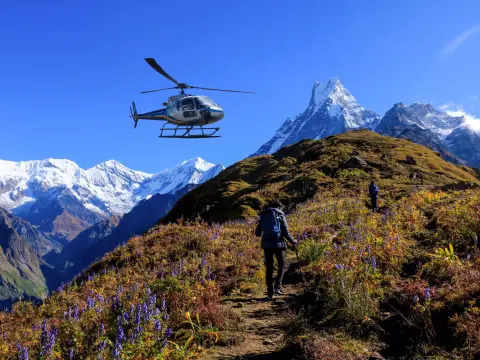
Mardi Himal remains one of Nepal's least-known major trekking destinations, overshadowed by its famous neighbors in the Annapurna range. This relative obscurity makes it perfect for travelers seeking spectacular mountain views without the crowds that pack more popular routes. The Mardi Himal helicopter tour opens access to this hidden sanctuary, revealing landscapes that combine the best elements of Nepal's mountain geography—intimate views of towering peaks, pristine forests, and a sense of genuine wilderness.
Mardi Himal itself rises to nearly nineteen thousand feet, a respectable peak overshadowed by its more famous neighbors: Machapuchare (the sacred fish-tail mountain), Annapurna South, and Hiunchuli. What makes Mardi special isn't its height but its position. The mountain sits on a ridge extending from Machapuchare, creating viewpoints that bring you extraordinarily close to these giants. From Mardi Himal Base Camp, Machapuchare towers almost directly above, its distinctive double-peaked summit dominating the skyline with an intimacy impossible from other viewpoints.
The helicopter flight to Mardi Himal departs from Pokhara, flying northeast into the Annapurna Conservation Area. The flight path initially follows the Modi Khola valley, the same route that trekkers take toward Annapurna Base Camp. But instead of continuing to Annapurna Sanctuary, the helicopter veers east, climbing toward the Mardi ridgeline. This approach reveals the geography's complexity—multiple ridges descending from the main Annapurna massif, each separated by deep valleys carved by glacier-fed streams.
The landscape below transitions dramatically during the ascent. Lower elevations support dense rhododendron forests that explode with color during spring blooming. As altitude increases, the forests thin and give way to alpine vegetation—juniper, bamboo thickets, and eventually just grass and rock. This vegetation gradient reflects not just elevation but also exposure—south-facing slopes hold more moisture and support richer plant communities, while north-facing slopes remain drier and more barren.
Landing at or near Mardi Base Camp brings you into an environment that feels genuinely wild. Unlike more popular trekking destinations with their tea houses and lodges, Mardi retains a frontier character. The base camp itself consists of just a few simple structures—places for trekkers to shelter, not tourist infrastructure. The setting emphasizes the mountains themselves, which rise with overwhelming presence in every direction.
Machapuchare deserves particular attention. This mountain holds special status in Nepali culture as a sacred peak, closed to climbing by government decree. The prohibition reflects respect for the mountain's spiritual significance—local legend identifies Machapuchare as the dwelling place of Shiva, and ascending it would constitute desecration. From Mardi Base Camp, you see why people consider this mountain sacred. Its perfect symmetry, the way ice and rock compose its flanks, the sheer verticality of its faces—everything about Machapuchare suggests something beyond ordinary geology.
The wildlife of the Mardi area, like much of the Annapurna region, includes species adapted to dramatic elevation gradients. Lower forests support langur monkeys, whose calls echo through the trees. Higher elevations host Himalayan tahr and occasionally snow leopard, though the latter remain so elusive that even dedicated researchers rarely see them. The bird life impresses, with numerous pheasant species, including the national bird of Nepal, the Impeyan Pheasant (Danphe), displaying iridescent plumage that seems impossibly colorful against gray rocks and white snow.
Mardi Himal Helicopter Tour | 1.5 to 2.5 hours days
Heli Tours
Ama Yangri: The Mother Protector's Sacred Summit
Ama Yangri represents a different category of hidden gem—not a lake or valley but a mountain viewpoint that combines spiritual significance with extraordinary panoramic views. Located northeast of Kathmandu in the Helambu region, Ama Yangri translates as "Mother Protector," reflecting the mountain's spiritual importance to both Buddhist and Bon traditions. The Ama Yangri helicopter tour provides access to this sacred summit, offering views that span from the Langtang range to the Jugal Himal, with even distant glimpses of Everest on clear days.
The flight to Ama Yangri departs from Kathmandu, heading northeast across the Kathmandu Valley and into the Helambu region. This area, populated primarily by Sherpa and Tamang communities, offers rich cultural experiences alongside mountain scenery. The region's Buddhist traditions run deep, with numerous monasteries, chortens (Buddhist shrines), and mani walls (stone walls carved with prayers) marking the landscape.
Ama Yangri's summit, reaching approximately thirteen thousand feet, isn't particularly high by Himalayan standards. But its location creates exceptional viewpoints. Standing atop Ama Yangri, you see the entire Langtang range spread before you—Langtang Lirung, Ganesh Himal, and countless other peaks forming a wall of white on the northern horizon. To the east, the Jugal Himal rises, less famous than Langtang but equally dramatic. On exceptionally clear days, particularly in autumn, you can see the distant pyramid of Everest rising above intervening ridges, a reminder that you're looking across one of Earth's most extraordinary geological features.
The spiritual dimension of Ama Yangri manifests in the prayer flags, shrines, and small structures that mark the summit. Local communities have performed rituals here for generations, making offerings and seeking blessings from the mountain spirit believed to reside here. The name itself—Mother Protector—reflects belief in the mountain as a guardian deity, watching over the valleys below and blessing those who approach with proper respect.
The helicopter landing at or near Ama Yangri brings you into direct contact with this spiritual landscape. The altitude causes mild breathlessness but nothing like the extreme effects of higher-elevation destinations. The temperature can be cold, particularly in morning or evening hours, but generally remains manageable with proper layering. The environment encourages walking around, exploring the summit area, and finding different vantage points for photography or simply absorbing the views.
The Helambu region itself deserves attention as one of Nepal's hidden cultural treasures. The area's Sherpa communities, though related to the more famous Sherpa people of the Everest region, maintain distinct traditions and dialects. Their villages, built in traditional styles with stone walls and slate roofs, cluster on hillsides with views extending across valleys toward distant mountains. Apple orchards and potato fields create a patchwork of agriculture at elevations where most crops fail.
Buddhism in Helambu shows particular vibrancy. Monasteries serve as community centers, schools, and spiritual anchors. During major festivals, entire communities gather for multi-day ceremonies featuring mask dances, prayers, and rituals that connect contemporary practice with ancient traditions. The elderly maintain knowledge of old songs, stories, and practices that provide continuity with the past, even as younger generations navigate between traditional ways and modern opportunities.
[trip:ama-yangri-helicopter-tour]
Upper Mustang: The Forbidden Kingdom Beyond the Mountains
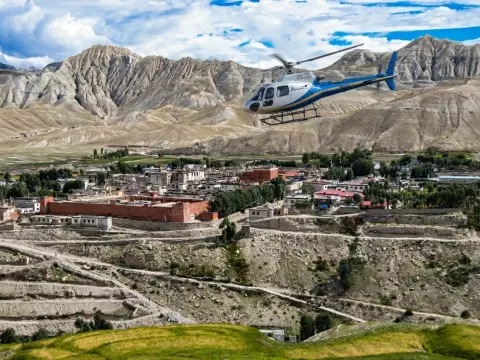
Upper Mustang represents Nepal's most remote and culturally distinct region, a high-altitude desert landscape tucked behind the Annapurna and Dhaulagiri ranges. Until 1992, this area remained closed to foreigners entirely, earning it the nickname "Forbidden Kingdom." Even after opening, access remains restricted and controlled, with special permits required and limited numbers of visitors allowed. The Upper Mustang helicopter tour offers perhaps the most extraordinary adventure available in Nepal—a journey into a landscape and culture that seem untouched by the modern world.
The geography of Upper Mustang differs dramatically from the rest of Nepal. Lying in the rain shadow of the Himalayan range, the region receives minimal monsoon moisture. The result is a high-altitude desert landscape of eroded cliffs, wind-carved formations, and barren mountains painted in shades of red, orange, and brown. The aesthetic resembles Tibet or parts of the American Southwest more than typical Himalayan landscapes. This unusual environment creates its own stark beauty—endless vistas of earth-colored terrain interrupted by the occasional splash of green where irrigation brings water to farmland.
The helicopter flight to Upper Mustang typically routes through Pokhara, following the Kali Gandaki Gorge northward. This gorge, claimed to be the world's deepest, cuts between Dhaulagiri and Annapurna, creating a natural corridor through the Himalayan barrier. The flight path reveals the dramatic transition from lush southern slopes receiving monsoon rains to the dry northern landscape where Tibetan cultural influence dominates.
Lo Manthang, the traditional capital of Upper Mustang, serves as the primary destination for most tours. This walled city, founded in 1380, preserves medieval Tibetan architecture and urban planning remarkably intact. High earthen walls surround the city, protecting it from wind and potential enemies. Inside, whitewashed buildings line narrow streets, with ornate painted woodwork decorating doorways and windows. The Raja (king) of Mustang, though his political power ended with Nepal's transition to democracy, still maintains a residence in Lo Manthang and embodies the region's cultural heritage.
The Buddhist culture of Upper Mustang represents one of the world's best-preserved expressions of Tibetan tradition. While Tibet itself underwent massive disruption during China's Cultural Revolution, Upper Mustang's isolation protected it. Ancient monasteries house murals and manuscripts dating back centuries, preserved by the dry climate. Monks continue traditional practices largely unchanged, maintaining rituals and knowledge that have disappeared or been modified elsewhere. This cultural continuity makes Upper Mustang invaluable for understanding Tibetan Buddhism's full historical and artistic development.
Sky burial, the Tibetan funerary practice of exposing bodies to be consumed by vultures, continues in Upper Mustang. This practice, offensive to some but holding deep meaning within Buddhist philosophy, reflects belief in the body's impermanence and the merit gained by offering one's remains as sustenance to living creatures. While not something tourists observe directly, the presence of these practices reminds visitors that they're encountering a living culture, not a museum display.
The architecture of Upper Mustang fascinates anyone interested in traditional building methods. Structures use primarily stone, mud brick, and wood—materials available locally in this resource-scarce environment. Roofs are flat, as the minimal rainfall doesn't require pitched roofs for water drainage. Buildings typically rise two or three stories, with livestock and storage on ground levels and living spaces above. Windows remain small to conserve heat, with interiors often dark but providing refuge from the intense high-altitude sun and wind.
The artistic heritage of Upper Mustang includes some of Himalayan Buddhism's finest examples. Monastery murals painted centuries ago depict Buddhist deities, mandalas, and narrative scenes with extraordinary detail and vivid colors. These paintings used mineral pigments—ground stones mixed with binding agents—that have retained their brilliance despite centuries of exposure. Some monasteries also house clay sculptures, carved wooden altars, and religious texts written in gold ink on black paper, all representing artistic traditions reaching back to when Lo Manthang served as an important trading and cultural center on routes between Tibet and India.
The people of Upper Mustang, primarily of Tibetan ethnicity, maintain distinctive cultural practices. Their language differs from Nepali, belonging instead to Tibetan linguistic family. Clothing reflects Tibetan traditions, with women wearing distinctive striped aprons and men favoring chuba (long robes). Polyandry—marriage of one woman to multiple brothers—though less common now, historically helped preserve agricultural land by preventing subdivision among many heirs.
Upper Mustang Helicopter Tour | days
Heli Tours
Pathivara: The Eastern Shrine of Power
While most of Nepal's famous religious sites cluster in the central and western regions, the eastern hills hold their own sacred treasures. Pathivara Temple, perched atop a mountain at approximately twelve thousand feet in the Taplejung district, ranks among Hinduism's important pilgrimage destinations. The Pathivara Darshan helicopter tour brings devotees and travelers to this remote shrine, revealing landscapes and spiritual traditions that remain unknown to most international visitors.
Pathivara's significance lies in its identification as a Shakti Peetha—sacred sites scattered across South Asia marking places where parts of the goddess Sati's body fell to earth. Hindu tradition holds that the goddess's upper body part landed at Pathivara, making it a place of immense spiritual power, particularly for those seeking blessings related to fertility, prosperity, and protection. Devotees believe that wishes made at Pathivara with sincere heart will be fulfilled, drawing thousands of pilgrims annually to this remote mountaintop.
The helicopter journey to Pathivara begins typically from Kathmandu or Biratnagar, flying east across Nepal's diverse middle hills. This eastern region receives more rainfall than the central hills, resulting in lusher vegetation and steeper terrain. Rice terraces cascade down hillsides, tea plantations cover entire valleys, and dense forests cling to ridges and gorges. The area's population density is lower than in central Nepal, with villages more widely scattered and connected by trails rather than roads in many areas.
Approaching Pathivara, the temple becomes visible atop its mountain, a small white and gold structure standing against gray rock and sky. The setting offers extraordinary views—north to the Kanchenjunga massif (the world's third-highest peak), east toward Sikkim and the eastern Himalayan ranges, south across the foothills descending toward India, and west along the spine of the Mahabharat range. On clear days, this viewpoint ranks among Nepal's most comprehensive mountain panoramas, revealing the full breadth of the eastern Himalayas.
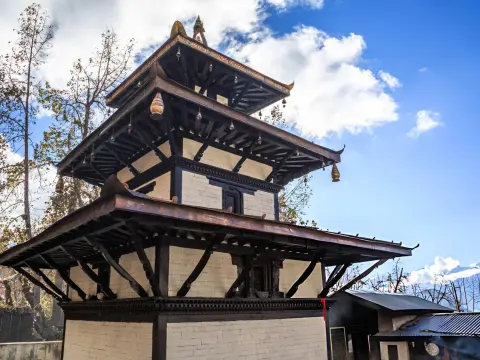
The temple itself maintains traditional Nepali religious architecture—pagoda-style roof, intricate woodwork, and brightly painted decorations. Inside, the main deity representation draws constant worship from devotees making offerings of flowers, incense, and coins. Priests maintain temple rituals, conducting ceremonies and blessing pilgrims who come seeking divine intervention in their lives. The atmosphere combines reverence with festivity, particularly during major festivals when the mountaintop transforms into a spiritual gathering place with thousands of devotees camping in the surrounding areas.
The region around Pathivara demonstrates eastern Nepal's cultural diversity. Limbu and Rai peoples, indigenous groups with distinct languages and traditions, comprise significant portions of the local population. Their shamanistic practices, though often combined with Hindu and Buddhist elements, maintain connections to animist traditions predating South Asia's major religions. The landscape itself holds sacred significance in these indigenous traditions, with particular mountains, trees, and water sources identified as homes of spirits requiring respect and offerings.
[trip:pathivara-darshan-helicopter-tour]
Halesi Mahadev: The Cave Shrine of Divine Mystery
Halesi Mahadev represents one of Nepal's most unusual sacred sites—a cave temple complex believed to be connected to major events in Hindu mythology. Located in the Khotang district of eastern Nepal, Halesi holds significance for Hindus, Buddhists, and followers of Kirant traditions (indigenous religion of eastern Nepal). The Halesi Mahadev Darshan helicopter tour provides access to this remarkable site, where natural formations combine with religious devotion to create an atmosphere of profound mystery.
Hindu tradition identifies Halesi as the place where Shiva hid inside a cave to escape demons. The demons pursued him into the cave, where Shiva created the Mahadev Lingam (symbolic representation of Shiva) that remains the primary object of worship. The cave system itself inspires awe—multiple chambers connected by passages, some requiring visitors to crawl through narrow openings, others opening into spaces large enough for gatherings. Natural stone formations inside the caves have been interpreted as various deities and sacred symbols, with priests explaining the mythological significance of each feature.
Buddhists also claim Halesi, believing it to be one of four caves where Guru Padmasambhava (the saint who brought Buddhism to Tibet) meditated during his travels. Buddhist tradition points to different features of the caves as proof of Padmasambhava's presence—meditation seats worn into stone, hand impressions in cave walls, and the subtle energy that practitioners say permeates the space. This multiple religious claiming of Halesi reflects Nepal's syncretic spiritual tradition, where Hindu and Buddhist practices often interweave, and sacred sites serve multiple communities simultaneously.
The Kirant people, eastern Nepal's indigenous inhabitants, hold their own traditions regarding Halesi. In Kirant belief, the caves represent a gateway between worlds, a place where natural and supernatural forces meet. Kirant shamans perform rituals here, calling upon ancestral spirits and making offerings that follow practices predating both Hinduism and Buddhism. This layering of religious significance makes Halesi particularly interesting—the same physical space holds different meanings for different communities, all of whom consider it sacred.
The helicopter flight to Halesi crosses eastern Nepal's dramatic terrain. The region consists of steep ridges descending from Himalayan peaks toward the Terai plains, with rivers cutting deep gorges between mountains. The landscape shows intense cultivation wherever the slope allows—terraces carved into seemingly impossible angles, with farmers working land that appears to defy gravity. Villages perch on ridgelines or nestle in valley bottoms, accessed by trails that wind through forests and across suspension bridges swaying above rushing rivers.
Arriving at Halesi, you find not just the caves but an entire pilgrimage complex that has developed around them. Several temples occupy the surrounding area, housing various deities and providing facilities for pilgrims making offerings. A natural spring provides water considered holy, with devotees collecting it in bottles to take home. During festivals, particularly the Hindu festival of Shivaratri, thousands of pilgrims gather, camping in the area around the caves and creating a temporary city dedicated to worship and celebration.
Exploring the cave system requires both physical ability and respect for sacred space. Parts of the caves have been developed with lighting and pathways, but others remain in their natural state. Visitors remove shoes before entering, follow priests' instructions regarding what can be touched or photographed, and move with awareness that they're in active religious space. The experience combines adventure—crawling through passages, climbing over rocks—with spiritual atmosphere created by centuries of devotion focused in this underground sanctuary.
[trip:halesi-mahadev-darshan-helicopter-tour]
Practical Wisdom for Hidden Gem Helicopter Tours
Planning a helicopter tour to Nepal's lesser-known destinations requires different considerations than booking standard Everest or Annapurna flights. These hidden gems often involve longer flights, more remote locations, and sometimes more challenging logistics.
Weather becomes even more critical for remote destinations. While popular routes like Everest Base Camp see multiple flights daily (meaning you might reschedule to later the same day if morning weather proves poor), flights to places like Rara or Upper Mustang may operate less frequently. This means weather delays could extend beyond hours to days. Building flexibility into your Nepal itinerary—arriving with extra days before departing flights, avoiding booking these tours on your last day in Nepal—protects against weather-related disappointments.
Permits for some destinations, particularly Upper Mustang, require advance processing. You cannot simply show up and expect to fly into restricted areas. Your helicopter operator should handle permit arrangements, but this requires providing passport information, photographs, and other documentation well before your flight date. For spiritual sites like Pathivara or Halesi, no special permits beyond standard helicopter flight permissions are needed, but cultural sensitivity becomes particularly important.
Physical preparation matters less for helicopter tours than trekking, but some basic fitness helps. Even brief exposure to high altitude can affect people unexpectedly. The combination of excitement, altitude, and cold can create dizziness or breathlessness. Moving slowly at landing sites, staying hydrated, and knowing your body's signals prevents problems. For elderly travelers or those with health conditions, consulting doctors before booking high-altitude tours provides peace of mind.
Cultural preparation often matters more than physical preparation for sacred sites. Understanding basic respectful behavior—removing shoes when entering temples, asking permission before photographing religious ceremonies, dressing modestly at pilgrimage sites—ensures you're a welcome visitor rather than an intrusive tourist. Learning a few basic phrases in Nepali ("Namaste" for greeting, "Dhanyabad" for thank you) demonstrates respect and often opens doors to genuine interactions with local people.
Photography equipment considerations differ from more famous routes. These hidden destinations may have been photographed less, meaning your images could capture relatively undocumented landscapes. This increases responsibility to photograph respectfully, particularly in sacred spaces where local people might have concerns about how their religious practices are portrayed. Always ask permission before photographing people, and respect any restrictions around sacred objects or ceremonies.
The best times for visiting Nepal's hidden gems largely align with general Nepal travel seasons—spring (March to May) and autumn (September to November) offer optimal weather. However, some destinations have their own considerations. Upper Mustang, being in the rain shadow, can actually be visited during monsoon season when much of Nepal experiences heavy rainfall. Rara Lake shows different character across seasons—lush and green in summer, with possible snow surrounding it in winter, and with crystal-clear skies in autumn.
Cost variations for these hidden gem tours can be significant. Longer flight times to remote destinations mean higher fuel costs and more helicopter time. Upper Mustang flights, for example, often cost substantially more than Everest Base Camp tours due to distance and permit requirements. However, the exclusivity of these experiences and the limited number of people who visit these destinations can justify the additional expense for travelers seeking genuinely unique experiences.
The Environmental and Cultural Balance
As helicopter tourism expands into Nepal's hidden corners, questions about environmental and cultural impact grow more urgent. These remote areas have remained unspoiled partly because of their inaccessibility. Opening them to helicopter access brings both opportunities and risks that travelers should understand.
The environmental equation includes carbon emissions from helicopter flights, noise pollution affecting both wildlife and local communities, and the physical impact of increased visitor numbers at fragile high-altitude sites. Helicopter companies in Nepal have made efforts to minimize impact—using more efficient aircraft, limiting flight frequencies in sensitive areas, and participating in carbon offset programs. But the fundamental reality remains that flying helicopters into pristine wilderness creates environmental effects.
Responsible travelers can make choices that minimize their impact. Selecting operators who demonstrate environmental awareness, properly disposing of all waste at landing sites (pack it in, pack it out), staying on designated paths to avoid trampling vegetation, and following all wildlife-viewing guidelines all help. Some travelers choose to make voluntary carbon offset payments equivalent to their flight emissions, supporting reforestation or renewable energy projects in Nepal.
Cultural impact requires even more careful consideration. Sacred sites like Gosaikunda, Pathivara, and Halesi Mahadev have served their communities' spiritual needs for centuries. The arrival of tourists, even respectful ones, changes the atmosphere of these places. Local people who once approached these sites after days of pilgrimage now share them with travelers who arrive by helicopter in minutes. This doesn't necessarily create conflict, but it requires sensitivity and awareness.
Supporting local communities represents one of the most positive aspects of helicopter tourism to remote areas. Many of these regions have limited economic opportunities. Tourism, when managed well, provides income to guides, lodge owners, and others who serve visitors. Choosing tours that include local community interactions, purchasing handicrafts directly from artisans, and hiring local guides for exploration at landing sites all help ensure tourism benefits reach the people whose homeland you're visiting.
The question of whether helicopter access "spoils" these destinations has no simple answer. For some, the journey represents essential part of the experience—weeks of trekking to reach Upper Mustang or days of climbing to Gosaikunda create spiritual significance that quick helicopter access cannot replicate. For others, particularly those for whom trekking isn't physically possible, helicopter access opens doors to experiences that would otherwise remain forever closed. Both perspectives hold validity.
Perhaps the wisest approach recognizes that different modes of travel serve different purposes. Trekking allows deep immersion in landscape and culture, building fitness and resilience while creating a sense of achievement. Helicopter tours provide efficiency and accessibility, opening spectacular destinations to those who cannot trek or who have limited time. Neither approach is inherently superior—they simply offer different ways of engaging with Nepal's extraordinary geography and culture.
Combining Multiple Destinations: The Grand Tour Approach
For travelers with adequate time and budget, combining multiple hidden gem destinations into comprehensive helicopter tours creates extraordinary experiences. Several operators offer multi-day itineraries that showcase different aspects of Nepal's diversity.
A typical combined tour might include Gosaikunda and the Langtang region on day one, covering the sacred lakes and Kyanjin Gompa. Day two could focus on the Annapurna region, visiting both Annapurna Base Camp and Mardi Himal. Day three might venture to eastern Nepal's pilgrimage sites, exploring Pathivara and Halesi Mahadev. This approach provides a comprehensive view of Nepal's geographical and cultural diversity while maximizing the value of the time and expense required for helicopter operations.
The Grand Everest & Gokyo helicopter tour represents another multi-destination approach, combining Everest Base Camp with the stunning Gokyo Lakes in a single comprehensive experience. This tour showcases the Khumbu region's full splendor—the world's highest peak alongside the turquoise lakes that represent some of the Himalayas' most beautiful natural features.
Weather flexibility becomes crucial for multi-day helicopter tours. Having alternate destinations planned allows operators to adjust to conditions—if clouds obscure one region, you can pivot to another area experiencing clearer weather. This flexibility requires trust in your operator and willingness to adapt to conditions beyond anyone's control.
Beyond Mountains: The Human Stories
While helicopter tours naturally focus on spectacular landscapes and famous peaks, the hidden gems of Nepal tell human stories as compelling as the geography itself. Every village visible from the air, every monastery perched on a ridge, every terraced hillside represents human perseverance, creativity, and adaptation to one of Earth's most challenging environments.
The Tamang communities of the Langtang region rebuilt their lives after the 2015 earthquake destroyed entire villages. Their resilience demonstrates the strength of mountain communities facing unimaginable loss. When you visit Kyanjin Gompa or fly over the Langtang Valley, you're seeing landscapes of both beauty and survival.
The Sherpa villages scattered through the eastern hills maintain cultural traditions while navigating the pressures of modernization. Younger generations often leave for Kathmandu or foreign countries seeking opportunities, while elderly people preserve traditional knowledge of farming, crafts, and spiritual practices. Helicopter tourism brings both economic opportunity and accelerated cultural change to these communities.
The monks maintaining monasteries in Upper Mustang, Gosaikunda, and other remote locations dedicate their lives to preserving Buddhist teaching and practice. They rise before dawn for prayers, maintain centuries-old structures, and welcome pilgrims and visitors alike. Their presence ensures that these sacred sites remain living spiritual centers rather than merely tourist attractions.
The farmers working terraced fields visible from helicopter windows demonstrate agricultural expertise developed over countless generations. They know which crops grow at which elevations, when to plant and harvest, how to manage water in environments where rainfall may be scarce or excessive. Their knowledge represents sophisticated environmental adaptation developed long before modern agricultural science.
Making Your Choice: Which Hidden Gem Calls to You?
With so many spectacular destinations accessible by helicopter, choosing becomes challenging. Here are some frameworks for making decisions aligned with your interests and values.
For spiritual seekers and those interested in religious culture, Gosaikunda, Pathivara, and Halesi Mahadev offer profound experiences. These sites combine natural beauty with active spiritual practice, providing insights into how sacred geography shapes religious life. Visiting during major festivals amplifies the spiritual atmosphere but also means sharing these sites with large numbers of pilgrims.
For nature lovers and those seeking pristine wilderness, Rara Lake stands out. Its remoteness, ecological diversity, and spectacular beauty create an experience more about wilderness than culture. Photographers particularly appreciate Rara's unusual landscapes and the way light plays on its deep blue waters.
For cultural enthusiasts fascinated by Tibetan civilization, Upper Mustang provides unmatched opportunities. The region's preserved medieval architecture, ongoing Buddhist traditions, and distinctive desert mountain landscape create a destination unlike anywhere else in Nepal. However, Upper Mustang requires more time and budget than other options.
For those wanting diverse mountain views without extreme altitude exposure, Mardi Himal and Ama Yangri offer excellent choices. These destinations provide spectacular Himalayan panoramas at more moderate elevations, making them suitable for families with children or travelers concerned about altitude effects.
For pilgrims—whether religious or secular—making spiritual journeys, the various sacred sites each offer different qualities. Gosaikunda holds particular power during full moon festivals. Pathivara draws those seeking blessings for specific life goals. Halesi Mahadev appeals to those fascinated by cave mysteries and multiple religious traditions sharing sacred space.
The Journey Forward
Nepal's hidden gems will not remain hidden forever. As helicopter access expands and social media spreads awareness of spectacular destinations, more travelers will seek these experiences. This growing interest creates both opportunities and challenges.
The opportunity lies in the potential for tourism to support remote communities economically while raising awareness about Nepal's incredible diversity beyond just Everest. When managed well, tourism can fund monastery restoration, support local schools, and provide alternatives to outmigration for young people. It can create incentives for environmental conservation and cultural preservation.
The challenge involves ensuring this growth happens sustainably—that increased visitation doesn't overwhelm fragile environments or disrupt local communities, that economic benefits reach local people rather than just operators and middlemen, that sacred sites maintain their spiritual character despite becoming tourist destinations.
As a traveler, your choices matter. Selecting operators who demonstrate environmental and cultural responsibility, treating local people and sacred sites with respect, educating yourself about the places you visit, and sharing your experiences in ways that promote responsible tourism all contribute to positive outcomes.
Conclusion: The Call of Hidden Nepal
The rotors begin to turn, and as the ground falls away beneath you, Nepal reveals itself in ways few travelers ever experience. Beyond the famous peaks and well-trodden trails lie landscapes of profound beauty and spiritual significance. Sacred lakes reflect mountains and sky with perfect clarity. Ancient monasteries preserve traditions reaching back centuries. Villages cling to impossible terrain, demonstrating human determination to make homes in the most challenging environments.
These hidden gems of Nepal—Gosaikunda, Rara Lake, Upper Mustang, Pathivara, Halesi Mahadev, Mardi Himal, and countless others—await those willing to look beyond the obvious. They offer experiences that combine the spectacular with the sacred, the wild with the cultural, the ancient with the immediate.
Helicopter access makes these destinations reachable, but the journey remains meaningful. Whether you seek spiritual connection at sacred lakes, pristine wilderness at remote national parks, cultural immersion in Tibetan Buddhist traditions, or simply the pure experience of witnessing landscapes that defy description, Nepal's hidden sanctuaries deliver.
The mountains call to something deep within us—a desire to witness the extraordinary, to connect with landscapes that remind us of nature's power and beauty, to stand in places that have inspired reverence for generations. These hidden gems answer that call, offering not just spectacular views but windows into ways of life, spiritual traditions, and environmental wonders that make Nepal far more than just the home of Mount Everest.
Your journey to these hidden sanctuaries begins with a single decision—to look beyond the famous destinations, to seek the roads less traveled, to experience Nepal's full diversity. From the sacred waters of Gosaikunda to the forbidden kingdom of Upper Mustang, from the blue jewel of Rara Lake to the intimate grandeur of Mardi Himal, from the protective summit of Ama Yangri to the mystical caves of Halesi Mahadev, these destinations await your discovery.
The helicopter lifts off, the landscape opens beneath you, and Nepal's hidden treasures reveal themselves. This is more than sightseeing. This is connection to something ancient and ongoing, something that existed long before tourism and will continue long after. You're not just visiting beautiful places—you're bearing witness to sacred geography, participating in traditions of pilgrimage and reverence, experiencing landscapes that have shaped human spirituality and culture for millennia.
Choose your destination, trust your instincts, prepare properly, and go with an open heart. Nepal's hidden gems await, ready to reveal their secrets to those who seek them. The journey beyond the famous peaks promises rewards that extend far beyond spectacular photographs. It offers transformation, perspective, and memories that will resonate long after you return home. The mountains, lakes, and sacred spaces of hidden Nepal are calling. Will you answer?