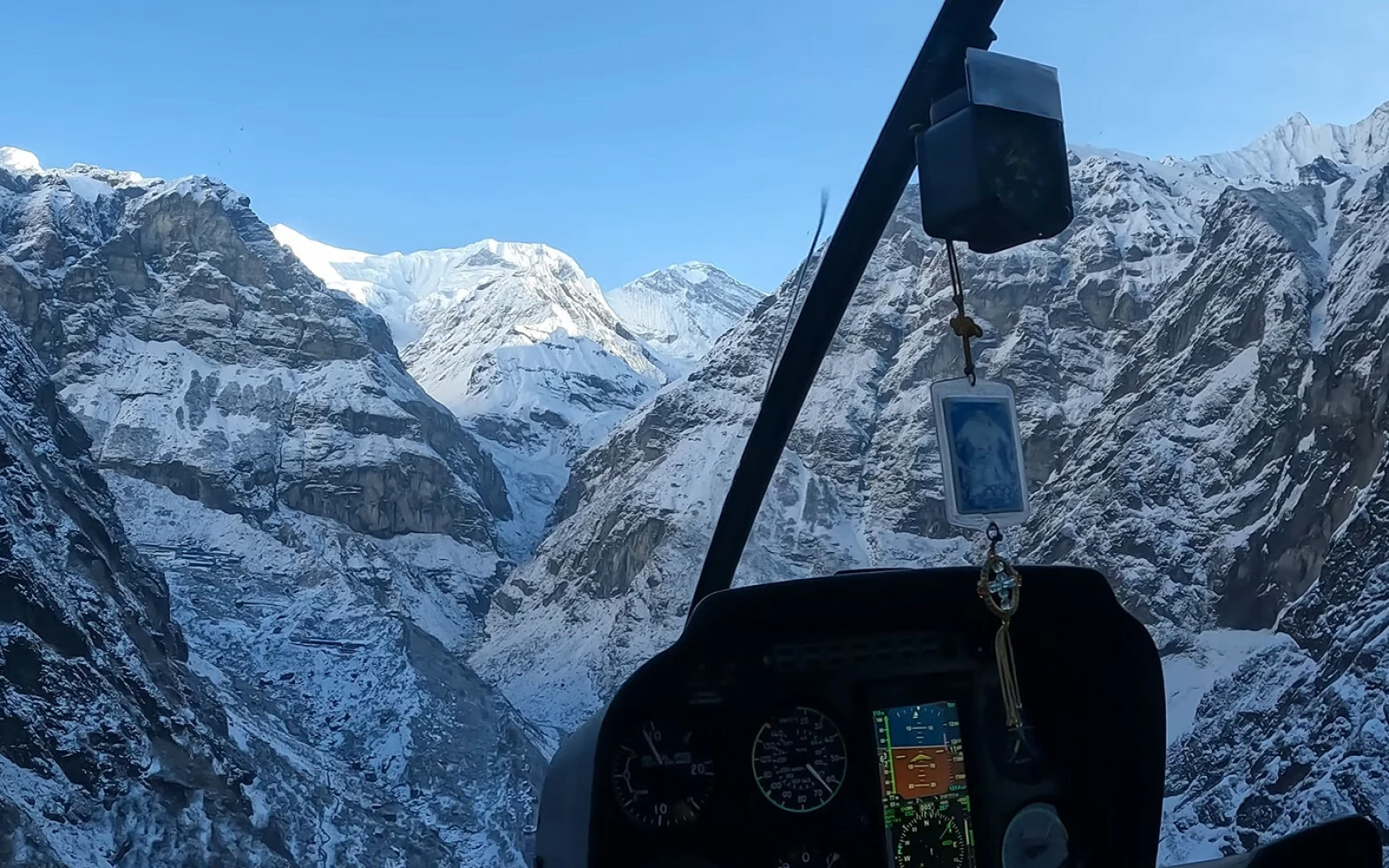
The rotors begin to turn, and within moments, the concrete helipad of Kathmandu fades beneath you. Green valleys stretch endlessly, terraced farmlands create natural artwork on hillsides, and then—there they are. The snow-capped giants of the Himalayas rising like ancient sentinels against an impossibly blue sky. This is what draws thousands of travelers each year to experience Nepal from the air, where mountains that took explorers weeks to reach are now just minutes away.
But behind every breathtaking photograph and every story of standing before Mount Everest lies a series of important questions that smart travelers need to ask. How safe are these flights? What's the best time to book? How do you choose a reputable operator? Whether you're planning your first helicopter adventure or looking to understand what makes these mountain flights so special, this comprehensive guide covers everything you need to know before you take to the skies above the Himalayas.
Why Helicopter Tours Have Become Nepal's Most Sought-After Experience
Nepal's landscape is both its greatest treasure and its biggest challenge. Roads wind precariously through mountain passes, and many of the country's most stunning locations remain days of trekking away from the nearest town. For generations, reaching places like Everest Base Camp, Annapurna Sanctuary, or the sacred lakes of Gosaikunda meant committing to lengthy expeditions that required physical fitness, time, and significant resources.
Helicopter tours changed this equation entirely. What once required two weeks of trekking can now happen in a single morning. Families with young children, elderly travelers with mobility concerns, business professionals with limited vacation time, and anyone who simply wants to witness the Himalayas without the physical demands of high-altitude trekking can now access these legendary places.
The appeal goes beyond convenience. There's something fundamentally different about seeing mountains from the air. When you trek to a viewpoint, you see the landscape from one perspective. From a helicopter, the entire geography unfolds beneath you like a living map. You see how valleys connect, how glaciers flow, how villages nestle into impossible corners of the terrain. The Himalayas reveal themselves in three dimensions, and the experience often moves people in ways they didn't anticipate.
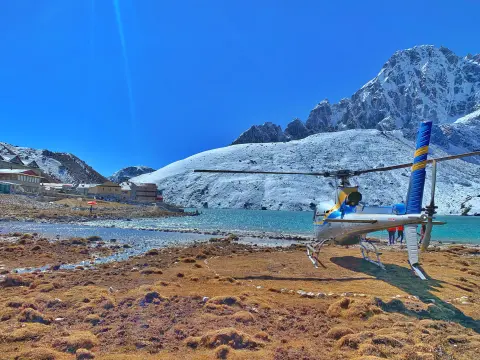
Recent years have seen helicopter tours expand beyond simple sightseeing. Pilgrims fly to sacred temples like Muktinath in hours rather than days. Photographers charter private flights to capture the golden hour light on Machapuchare. Couples celebrate anniversaries with breakfast at Hotel Everest View. The industry has matured from basic transportation into an adventure category all its own. Specialized tours like the Gokyo Lake helicopter tour and The Grand Everest & Gokyo heli tour combine multiple highlights into comprehensive mountain experiences.
Gokyo Lake Helicopter Tour | 5 hours days
Heli Tours
Understanding Helicopter Safety in Nepal's Mountain Environment
When you mention helicopter flights in Nepal, safety is often the first concern that surfaces. This is understandable given the challenging terrain, high altitudes, and variable weather conditions that define the Himalayan environment. However, the reality of helicopter safety in Nepal is more nuanced than many travelers realize.
Nepal's Civil Aviation Authority maintains strict oversight of all helicopter operations. Every aircraft used for commercial tours must undergo regular inspections and maintenance checks that follow international aviation standards. Pilots flying in Nepal's mountainous regions aren't just qualified—they're specialists. The high-altitude environment, thin air, and mountainous terrain require skills that go beyond standard helicopter piloting. Most pilots operating mountain flights have thousands of hours of experience specifically in Himalayan conditions.
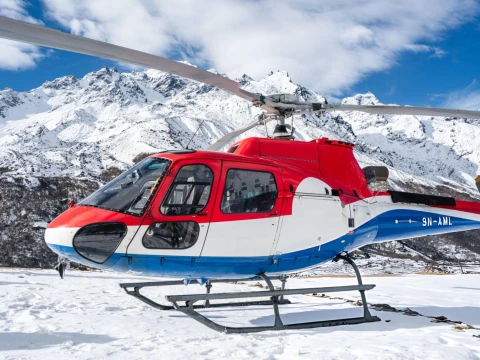
Modern helicopters used for mountain tours, typically Airbus AS350 B3e and H125 models, are specifically designed for high-altitude operations. These aircraft can operate safely at elevations above twenty thousand feet, well above the heights you'll experience on most tours. They're equipped with advanced navigation systems, terrain awareness technology, and redundant safety features that provide multiple layers of protection.
Weather represents the most significant variable in mountain flying. Nepal's weather can shift rapidly, particularly during monsoon season and winter months. This is why reputable operators maintain strict weather protocols. Flights are delayed or canceled if conditions aren't optimal, and while this can be frustrating for travelers, it's a sign of proper safety management rather than a flaw in the system.
The helicopter industry in Nepal has learned from past incidents. Following several high-profile accidents, authorities mandated the installation of Terrain Awareness and Warning Systems across all commercial helicopters. Minimum visibility requirements were tightened. Pilot training standards were enhanced. These aren't just regulations on paper—enforcement has improved significantly, and companies know their operating licenses depend on compliance.
That said, helicopter travel in mountainous terrain carries inherent risks that don't exist in other environments. Sudden weather changes, challenging landing zones at high altitude, and the physics of flying in thin air all factor into the safety equation. The key is choosing operators who respect these challenges rather than dismiss them.
Selecting a Reputable Helicopter Operator: What Actually Matters
Not all helicopter companies in Nepal operate with the same standards, and the difference between a well-run operation and a cut-rate service can be significant. Here's what matters when you're evaluating operators.
First, look at their safety record. Reputable companies are transparent about their history. They should be able to tell you about their aircraft maintenance schedules, pilot qualifications, and safety protocols without hesitation. Companies that have been operating for many years and have served thousands of passengers without incidents aren't just lucky—they're doing something right.
Check what type of aircraft they use and how old those aircraft are. Newer helicopters have better safety systems, but age isn't the only factor. What matters more is maintenance history. A well-maintained older aircraft can be safer than a newer one that's been poorly cared for. Ask about maintenance records and whether the company uses certified maintenance facilities.
Pilot experience makes an enormous difference in mountain flying. Ask about the pilot's total flight hours, and specifically their hours flying in Nepal's mountain regions. A pilot with five thousand hours of experience might seem impressive, but if only a hundred of those hours are in mountain conditions, they're less qualified than someone with two thousand hours who's been flying Himalayan routes for years.
Insurance coverage is another crucial factor. Ensure the operator carries comprehensive liability insurance that covers passengers. This isn't just about protecting yourself financially—companies that invest in proper insurance are generally more serious about safety overall.
Pay attention to how the company communicates about weather and delays. Operators who promise guaranteed flights regardless of conditions are telling you they prioritize your money over your safety. The best companies are upfront about the possibility of weather delays and have clear policies about rescheduling or refunds.
Look at customer reviews, but read them critically. A handful of negative reviews among hundreds of positive ones might just reflect unrealistic expectations or weather disappointments. Look for patterns. If multiple reviews mention maintenance issues, pilot concerns, or safety shortcuts, those are red flags worth taking seriously.
Price can be an indicator, though not a perfect one. The cheapest operator is rarely the best choice in an industry where cutting corners can have serious consequences. That doesn't mean you need to book the most expensive option, but extremely low prices should make you ask why they're possible.
Best Seasons for Helicopter Tours: Timing Your Flight for Perfect Conditions
Weather shapes everything about helicopter tours in Nepal, and understanding seasonal patterns helps you plan the best possible experience. The country experiences four distinct seasons, each offering different advantages and challenges for mountain flights.
Spring, running from March through May, is considered peak season for helicopter tours. During these months, the post-winter weather stabilizes, bringing clear skies and excellent visibility. Morning flights especially benefit from calm conditions and crisp air that makes mountain views spectacularly clear. Temperatures at high altitudes are cold but manageable, and the risk of sudden weather changes is relatively low. The main downside is that spring is also peak trekking season, so popular routes can be crowded, and booking well in advance becomes essential.
The monsoon season from June through August brings increased challenges.Heavy rainfall, fog, and cloud cover can limit visibility and create unpredictable weather patterns.Many operators reduce their flight schedules during monsoon, and cancellations become more common. However, this season isn't impossible for flights.Early morning hours before clouds build up can still offer excellent conditions, and you'll find better availability and sometimes lower rates. If you're flexible with timing and can accept a higher risk of weather delays, monsoon season can work.
Autumn, spanning September through November, rivals spring as the best time for helicopter tours. Post-monsoon air is incredibly clear, having been washed clean by summer rains. Visibility often exceeds what you see in spring, with mountain views that stretch for hundreds of kilometers. Weather is generally stable, though occasional remnants of monsoon activity can still affect early September. October and November are particularly prized for their combination of clear skies, comfortable temperatures, and the festive atmosphere as Nepal celebrates its major holidays.
Winter, from December through February, presents unique conditions. The air is at its clearest during these months, potentially offering the most spectacular mountain views of the year. However, cold temperatures create their own challenges. High-altitude landing sites can become dangerously icy, and some destinations may be inaccessible. Morning flights in winter mean dealing with freezing temperatures, which can be uncomfortable during landing stops. That said, for flights that don't involve landings at extreme altitudes, winter can be an excellent choice with fewer tourists and good visibility.
The time of day matters almost as much as the season. Morning flights, particularly those departing between six and nine a.m., benefit from calmer air and better visibility. As the day progresses, thermal activity increases, creating turbulence and often building cloud cover. If you're booking a mountain flight, push for the earliest available departure time.
Popular Helicopter Routes: Where the Mountains Come Alive
Nepal offers numerous helicopter routes, each showcasing different aspects of the country's spectacular geography. Understanding what makes each route special helps you choose the experience that matches your interests.
The Everest Base Camp helicopter tour remains the undisputed king of mountain flights. Taking off from Kathmandu, you fly east over gradually rising terrain, passing scattered villages and terraced hillsides. As you approach the Khumbu region, the landscape transforms. The Dudh Koshi river cuts through deep valleys, and the first major peaks begin to appear. Lukla, with its famously short runway, marks the gateway to the Everest region.
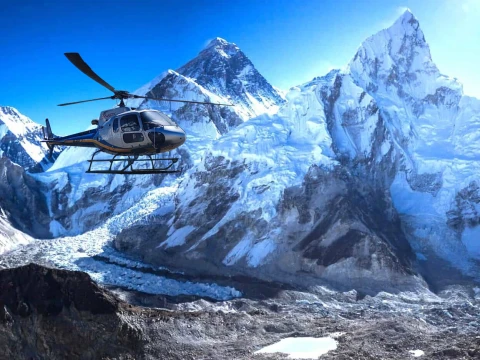
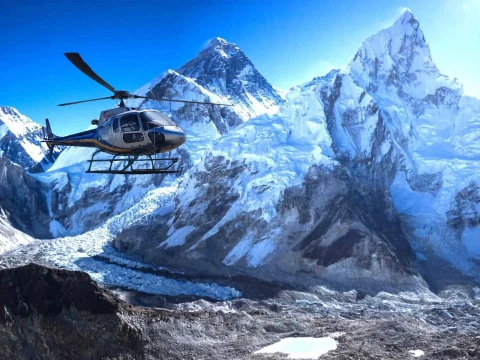
From Lukla, the helicopter climbs into the heart of the Khumbu. You pass over Namche Bazaar, the Sherpa capital that clings to a hillside amphitheater. Tengboche Monastery appears below, its position offering views that have inspired countless trekkers. Then the giants reveal themselves. Ama Dablam's distinctive pyramid dominates the southern skyline. Lhotse and Nuptse create a massive wall of ice and rock. And finally, Everest itself—not the pointed peak you might imagine, but the massive pyramid that represents the highest point on Earth.
Most Everest tours include a landing at Kala Patthar or a nearby viewpoint, though recent regulations have limited some landing locations within Sagarmatha National Park. After soaking in the views, flights typically stop at Hotel Everest View at Syangboche for breakfast with the Himalayas spread before you. The total experience lasts four to five hours and covers ground that would take trekkers two weeks to reach and return from. For those with limited time in Lukla, the Lukla to Everest Base Camp helicopter tour offers a shorter alternative.
The Annapurna Base Camp helicopter tour offers a different character entirely. Flying from Pokhara, you head northwest into the Annapurna Conservation Area. This route showcases Nepal's diversity, passing from subtropical lowlands through rhododendron forests into the alpine zone. The flight path follows traditional trekking routes, giving you a bird's eye view of villages like Ghandruk and Chomrong that have welcomed trekkers for generations.
Approaching the Annapurna Sanctuary, the mountains create a natural amphitheater. Hiunchuli, Annapurna South, Gangapurna, and Machapuchare surround you in a 360-degree panorama of ice and rock. The base camp itself sits at over thirteen thousand feet, surrounded by some of the world's most impressive mountains. The intimacy of this setting differs from Everest—you're not just looking at distant peaks, you're inside a mountain sanctuary. If you're starting from Kathmandu, the Annapurna Base Camp heli tour from Kathmandu provides a convenient full-day option.
Langtang Valley helicopter tours provide access to a region that's somewhat less famous internationally but beloved by those who know Nepal well. The valley lies north of Kathmandu, close enough for a short flight but feeling worlds away. You fly over Langtang National Park, spotting wildlife habitat and pristine forests. The valley itself runs east to west, with Langtang Lirung dominating the northern skyline. Landings typically happen at Kyanjin Gompa, a monastery settlement where mountains rise directly from the valley floor. The Kyanjin Gompa helicopter tour is particularly popular with those seeking quieter, less-crowded mountain experiences.
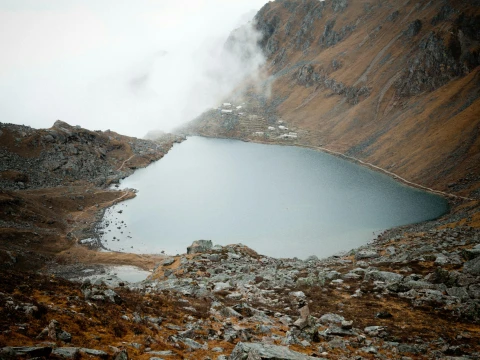
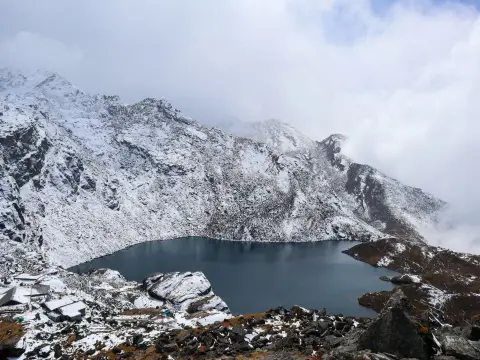
Gosaikunda helicopter tours combine natural beauty with spiritual significance. This chain of alpine lakes sits high in the Langtang region and holds deep importance in Hindu and Buddhist traditions. Thousands of pilgrims visit during festivals, trekking for days to reach the sacred waters. A helicopter tour brings you to this spiritual landscape in under two hours from Kathmandu. The flight path crosses dramatic ridgelines and offers views of peaks like Manaslu and Ganesh Himal. The Gosaikunda heli tour is especially meaningful during the Janai Purnima festival when the lakes become centers of spiritual celebration.
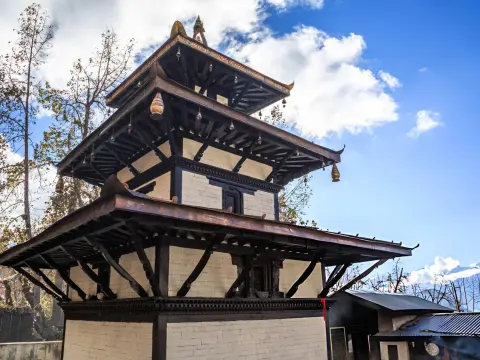
Muktinath helicopter tours serve primarily pilgrims visiting one of Nepal's most sacred sites. The temple sits in the Mustang region, in the rain shadow of the Annapurnas where the landscape becomes almost desert-like. Flying from either Kathmandu or Pokhara, you cross from the lush southern slopes into the trans-Himalayan zone where Tibetan culture dominates. The temple complex, with its 108 water spouts and eternal flame, attracts both Hindu and Buddhist pilgrims. Both the Muktinath pilgrimage helicopter tour from Kathmandu and the Muktinath pilgrimage helicopter tour from Pokhara offer access to this sacred destination.
Less common but increasingly popular are tours to Upper Mustang, Rara Lake, and Manaslu regions. These routes explore some of Nepal's most remote areas, places where roads don't reach and where traditional culture remains largely intact. These tours often require more time and cost more, but they reward travelers with landscapes and experiences that remain genuinely off the beaten path. The Upper Mustang helicopter tour ventures into the forbidden kingdom where ancient Tibetan culture thrives, while the Rara Lake helicopter tour takes you to Nepal's largest and deepest lake, surrounded by pristine wilderness.
Gosaikunda Heli Tour | 2 hours days
Heli Tours
What to Expect on Your Helicopter Tour: The Actual Experience
The morning of your helicopter flight typically begins early. Most tours depart between six and eight a.m. to capture optimal weather conditions. Your operator will provide pickup from your hotel, though some require you to make your own way to the domestic terminal of Tribhuvan International Airport in Kathmandu or to Pokhara Airport for Annapurna-region flights.
At the airport, you'll complete necessary paperwork. This includes a brief safety briefing where pilots or ground staff explain emergency procedures, weight distribution requirements, and what to expect during the flight. Don't skip this briefing—it contains important information even if you've flown in helicopters before.
Weight is a crucial factor in helicopter operations, especially at high altitude where thin air affects lift. You'll be weighed along with your luggage, and passengers may be assigned specific seats to maintain proper aircraft balance. This isn't a judgment about your size—it's basic physics of mountain flying. Some operators have strict luggage limits, so pack light and focus on essentials like cameras, warm layers, and sunscreen.
Once you board, the noise surprises many first-time helicopter passengers. Even with headsets, the sound of the rotors and engine is loud. Communication with pilots usually happens through the headset system, allowing you to hear commentary about landmarks and answering questions without shouting.
The takeoff is smooth compared to fixed-wing aircraft. Helicopters lift vertically before transitioning to forward flight, giving you an immediate sense of the landscape falling away beneath you. As you leave Kathmandu or Pokhara, the first few minutes showcase the urban sprawl giving way to agricultural land, then terraced hillsides, and eventually forest and more rugged terrain.
Flying through the mountains feels different from commercial aviation. You're lower, moving slower, and the terrain passes close enough to see details. Rivers wind through valleys. Villages appear as clusters of buildings connected by footpaths. On clear days, you can spot trekkers on trails far below, tiny figures making their way through the landscape you're crossing in minutes.
The altitude gain happens gradually, allowing your body to adjust. Modern helicopters are pressurized to some degree, but you're still exposed to the elevation change. Some passengers experience mild altitude effects during high-altitude landings, which is why stops at places like Kala Patthar or Annapurna Base Camp are kept relatively brief—usually fifteen to thirty minutes.
Landing at high altitude requires skill from pilots. Thin air means less lift, and many landing zones are small, surrounded by terrain. You'll feel the helicopter settle gently, rotors still turning, ready for quick departure if weather changes. Once on the ground, you'll have time for photographs and to absorb the moment of standing at the base of mountains you've probably seen in images your entire life.
The return flight often follows a different route, giving you new perspectives on the same region. Pilots sometimes fly at different altitudes on the return, showing you the landscape from another angle. Many tours include a breakfast stop at a mountain lodge—these are highlights, combining excellent food with views that make ordinary breakfast experiences seem inadequate.
Health Considerations and Altitude Awareness
High-altitude helicopter tours expose you to elevations that can affect your body, even during brief visits. Understanding these effects and taking appropriate precautions makes your experience safer and more enjoyable.
The primary concern is altitude sickness, which can affect anyone regardless of fitness level when ascending quickly to high elevations. Symptoms include headache, nausea, dizziness, and shortness of breath. During helicopter tours, you're ascending from low elevation to potentially over seventeen thousand feet in less than an hour—faster than your body's normal acclimatization processes can handle.
However, the brief nature of helicopter landings at high altitude actually works in your favor. Altitude sickness typically requires extended exposure to trigger severe symptoms. A fifteen-to-thirty-minute stop at Everest Base Camp or Annapurna Base Camp rarely provides enough time for serious altitude effects to develop. Most passengers feel short of breath due to the thin air and may experience mild headaches, but severe altitude sickness is uncommon on these short excursions.
That said, individual responses to altitude vary enormously. Some people feel fine at eighteen thousand feet, while others struggle at twelve thousand. If you have a history of altitude sensitivity, let your operator know in advance. They may recommend shorter stops at high elevations or suggest tours to lower-altitude destinations.
Certain medical conditions require extra caution.Heart problems, lung conditions, and high blood pressure can all be exacerbated by rapid altitude changes and low oxygen levels. If you have any significant health conditions, consult your doctor before booking a high-altitude helicopter tour. Be honest with yourself and your doctor about what you're planning—a brief mention of "sightseeing in Nepal" doesn't capture the reality of flying to seventeen thousand feet.
Pregnancy, particularly in later stages, is often not recommended for high-altitude flights. The combination of altitude, potential turbulence, and limited medical resources at mountain landing sites creates unnecessary risk. Most operators have policies restricting pregnant passengers from mountain flights, and these policies exist for good reasons.
Children can generally handle high-altitude helicopter tours well, often better than adults. Their smaller size means they're less affected by cold temperatures, and they tend to adapt to altitude quickly. However, very young children can't communicate if they're feeling unwell, which creates challenges. Most operators set minimum age requirements, typically around five or six years old.
Practical preparations can minimize altitude effects. Stay well hydrated before and during your flight. Avoid alcohol the night before your tour, as it contributes to dehydration and can worsen altitude symptoms. Get adequate sleep. Consider taking altitude sickness medication like acetazolamide if your doctor recommends it, though this is typically more important for multi-day treks than brief helicopter tours.
At high-altitude landing sites, move slowly and deliberately. The combination of excitement, thin air, and cold can make you feel dizzy or light-headed. Take breaks when walking around. If you start feeling unwell, tell your pilot immediately. Descending even a few thousand feet can relieve symptoms quickly.
Cold is another factor to consider. High-altitude landing sites can be extremely cold even when Kathmandu or Pokhara is warm. Temperatures at Everest Base Camp regularly drop below freezing, and wind chill makes conditions feel even colder. Dress in layers, including a quality down jacket, warm hat, and gloves. Good boots matter too—you'll be walking on snow and ice at landing sites.
Everest Base Camp Helicopter Tour | 5 hours days
Heli Tours
Photography Tips: Capturing the Himalayas from the Air
Helicopter tours provide spectacular photography opportunities, but shooting from a moving aircraft at high altitude presents unique challenges. Knowing a few key techniques helps you return with images worthy of the experience.
The primary enemy of aerial photography is vibration. Helicopter windows, even when seemingly clear, can introduce blur if you're shooting through glass while the aircraft is moving. Whenever possible, wait for moments when the helicopter hovers or when doors are opened during flight. Many pilots are accommodating about briefly hovering near particularly photogenic peaks if weather and safety permit.
Shutter speed becomes critical in aerial photography. Aim for speeds of at least 1/500th of a second, preferably faster. This helps freeze both the movement of the aircraft and the details of the landscape below. Modern cameras with image stabilization help significantly, but don't rely on stabilization alone—fast shutter speeds remain your primary tool against blur.
The lighting in the Himalayas can be intense. Snow reflects sunlight powerfully, creating extremely bright highlights and deep shadows. Your camera's automatic exposure may struggle with this contrast. Shoot in RAW format if possible, as this gives you maximum flexibility in post-processing to recover details in highlights and shadows. Consider bracketing exposures—taking multiple shots at different exposure levels—for particularly challenging scenes.
Wide-angle lenses work well for capturing the scale of mountain panoramas, but don't neglect telephoto options. A lens in the seventy-to-two-hundred-millimeter range allows you to isolate individual peaks, capture detail in glaciers, or zoom in on villages and monasteries below. Bring both options if your camera system allows it.
Polarizing filters can be helpful for cutting through haze and deepening blue skies, but they reduce the amount of light entering your lens. Given the fast shutter speeds you need, this reduction might push your ISO too high and introduce noise. Test whether a polarizer helps or hurts in the specific lighting conditions of your flight.
Windows and reflections create challenges. Shooting through helicopter windows means dealing with glare, reflections, and sometimes scratches or marks on the glass. Position yourself close to the window without touching it, as contact transmits vibration directly to your camera. Cup your hand around the lens to block reflected light from inside the cabin. Some photographers bring lens hoods specifically for this purpose.
Composition from the air requires different thinking than ground photography. Look for patterns in the landscape—the curves of rivers, the terracing of farmland, the way glaciers flow down valleys. Leading lines work brilliantly in aerial photography. Watch for morning or evening light creating long shadows that add dimension to the terrain.
Don't forget people and cultural elements. Villages, monasteries, and even trekkers on trails far below add scale and human interest to mountain photographs. These elements help viewers connect with the landscape emotionally rather than just seeing it as abstract beauty.
During landing stops, you'll have time for more deliberate photography. This is when you can set up tripods (if allowed), compose carefully, and experiment with different angles. The challenge here is often time pressure—you typically have only fifteen to thirty minutes on the ground, and you'll want to spend some of that time simply experiencing the moment rather than viewing it through a viewfinder.
Battery life deserves special mention. Cold temperatures drain camera batteries quickly. Carry spare batteries in an inside pocket close to your body where body heat keeps them warm. Swap batteries before they die completely—a frozen battery is useless even if it had remaining charge.
Memory cards should have ample capacity. You'll be shooting more than you think, and you won't want to stop to delete images during the flight. Bring multiple cards rather than relying on a single large-capacity card. If one fails, you haven't lost everything.
Finally, remember to put the camera down occasionally. The temptation to photograph everything is strong, but some moments are better experienced directly rather than through a lens. The memory of standing at Everest Base Camp, feeling the cold wind, hearing the silence of the mountains—those sensations don't capture well in photographs but they're often what you'll remember most vividly years later.
Cost Considerations and Booking Strategies
Helicopter tours in Nepal represent a significant investment, with experiences ranging from a few hundred to several thousand dollars per person depending on the destination, duration, and whether you're booking a private charter or joining a group flight. Understanding how pricing works helps you budget appropriately and find the best value.
Group joining tours offer the most economical option. These flights operate on fixed schedules with set routes, and you share the helicopter with other travelers. Seats are sold individually, similar to commercial airline tickets. Group flights to popular destinations like Everest Base Camp typically accommodate four to five passengers plus the pilot. Expect to pay between eight hundred and twelve hundred dollars per person for major routes like Everest Base Camp, with shorter tours to destinations like Gosaikunda or Langtang costing proportionally less.
Private charters give you complete control over timing, route, and pace. The helicopter is exclusively yours, allowing you to customize the experience. Want to spend extra time at a particular viewpoint? Request a specific photography angle? Make an additional landing stop? Private charters make these possibilities real. However, this flexibility comes at a price—typically three to five thousand dollars for the entire aircraft, regardless of how many passengers you have. If you're traveling solo or as a couple, private charters become expensive per person. For groups of four or five, the per-person cost becomes comparable to group joining flights while offering significantly more flexibility.
Seasonal pricing variations exist but are less dramatic than you might expect. Peak seasons like spring and autumn don't always command huge premiums, though booking availability becomes more constrained. Some operators offer modest discounts during monsoon season to incentivize bookings during their slower period. The best strategy isn't necessarily chasing the lowest price but rather booking during the season that offers the weather conditions you want.
What's included in the tour price varies by operator. Standard inclusions typically cover the helicopter flight itself, pilot services, airport transfers from your hotel, and necessary permits for landing in protected areas. Some operators include breakfast stops in their base price, while others charge this separately. Carefully review what your quoted price includes to avoid surprises.
What's usually not included: your accommodation before and after the tour, meals other than any included breakfast, travel insurance, tips for pilots and ground staff, and personal expenses. If you're booking from overseas, international flights to Nepal are obviously separate.
Booking timing affects both price and availability. For spring and autumn departures, booking at least one to two months in advance is wise, particularly if you need specific dates. Last-minute bookings are sometimes possible and occasionally discounted, but they're risky—you may not get your preferred departure date or you might find no availability at all during peak season.
Travel insurance deserves serious consideration for helicopter tours. Given the significant cost and the reality that weather can force cancellations, insurance that covers trip interruption and cancellation is worth investigating. Ensure your policy specifically covers helicopter flights—some exclude them or classify them as adventure activities requiring additional coverage. Medical evacuation coverage is also important, though this is more relevant for general Nepal travel than for the helicopter tour itself.
Cancellation and refund policies vary significantly between operators. Weather cancellations typically result in rescheduling rather than refunds, which makes sense given that the operator controls the aircraft but not the weather. However, policies about your own cancellations differ widely. Some operators offer flexible rebooking, others charge cancellation fees, and some have strict no-refund policies. Read these terms carefully before booking.
Payment methods and currency matter. Many operators quote prices in US dollars and prefer payment in that currency. Credit cards are widely accepted but often incur processing fees. Bank transfers can save on fees but take longer to process. Local payment in Nepali rupees is possible but exchange rates used by operators may not be favorable compared to banks.
Environmental and Cultural Considerations
Helicopter tourism in Nepal exists within complex environmental and cultural contexts. Being aware of these dimensions makes you a more responsible traveler and helps ensure these experiences remain available to future visitors.
The environmental impact of helicopter flights includes noise pollution, carbon emissions, and potential disturbance to wildlife. These concerns are particularly relevant in protected areas like Sagarmatha National Park (Everest region) and Annapurna Conservation Area. Recent regulations have restricted some commercial helicopter activity in the Everest region specifically to address noise concerns affecting local communities and wildlife. These restrictions reflect Nepal's attempt to balance tourism revenue with conservation needs.
Carbon emissions from helicopter flights are non-trivial. A typical helicopter burns substantial fuel relative to the number of passengers carried. If environmental impact weighs heavily in your decision-making, consider supporting operators who invest in carbon offset programs or who participate in sustainable tourism initiatives. Some travelers choose to make voluntary carbon offset donations equivalent to their flight emissions.
The cultural impact of helicopter tourism is more nuanced. In some ways, helicopter access has been positive for mountain communities. It provides emergency medical evacuation services that have saved countless lives. It brings economic benefits to remote areas where tea houses and lodges serve helicopter tourists. It creates employment for pilots, guides, and support staff.
However, there are concerns. The ease of helicopter access has changed the nature of Himalayan tourism. Regions that once attracted primarily committed trekkers now see a different type of visitor. Sacred sites that were previously approached through days of pilgrimage can now be reached in hours, potentially altering the spiritual significance of the journey. The noise of frequent helicopter flights disrupts the profound silence that many consider integral to the mountain experience.
Local communities have mixed feelings about helicopter tourism. Economic benefits are welcomed, especially in regions where traditional agriculture struggles to support growing populations. However, cultural concerns exist about the pace of change and whether development is benefiting local people or primarily outside operators and investors. Supporting locally-owned helicopter companies and choosing tours that include community interactions can help direct benefits to mountain communities.
Respectful behavior at landing sites matters tremendously. Sacred locations like Muktinath require appropriate dress and behavior. Remove shoes where indicated, ask permission before photographing people or religious sites, and follow guidance from local caretakers. At mountain base camps, stay on designated paths to avoid damaging fragile alpine vegetation. Pack out all trash, even small items like energy bar wrappers—what seems insignificant on an individual level becomes substantial when thousands of tourists pass through.
Making Your Helicopter Tour Decision
Choosing a helicopter tour requires balancing numerous factors: budget, time constraints, physical abilities, weather season, and personal interests. There's no universally correct choice, but understanding your priorities helps identify the right option.
If seeing Mount Everest is a lifelong dream and you have limited time in Nepal, the Everest Base Camp helicopter tour makes sense despite its cost. You're not just paying for a flight—you're accessing an experience that would otherwise require two weeks of trekking, significant fitness, and considerable physical discomfort. For many travelers, particularly older adults or those with mobility limitations, the helicopter tour might be the only realistic way to see Everest up close.
If budget is a primary concern, shorter tours to destinations like Gosaikunda or Langtang offer Himalayan experiences at lower cost. These tours may not have Everest's name recognition, but the mountain scenery can be equally spectacular, and you still get the magic of seeing Nepal from the air.
For photographers or serious mountain enthusiasts, private charters offer value that group tours can't match. The ability to request specific routes, angles, and extra time at viewpoints creates opportunities for images and experiences that justified the additional expense. If you're splitting costs among four or five people, private charters become surprisingly affordable.
If cultural and spiritual elements interest you as much as mountain scenery, tours to pilgrimage sites like Muktinath or Gosaikunda combine aerial perspectives with meaningful cultural interactions. These tours often attract different crowds than pure mountain sightseeing flights, sometimes creating more authentic experiences.
Families with children often find helicopter tours work remarkably well. The relatively short duration means children don't get bored, and the novelty of helicopter flight keeps them engaged. Tours to lower elevations like Annapurna Base Camp or Pokhara to Kathmandu city flights work well for families with younger children.
For those who value sustainability and want to minimize environmental impact, consider that a single helicopter tour creates more emissions than several days of trekking. If you have the time and physical ability, trekking remains the more environmentally friendly option. However, helicopter tours still generate less overall environmental impact than the international flights that brought you to Nepal in the first place, so this consideration exists on a continuum rather than as a binary choice.
Final Thoughts: The Magic Above the Mountains
There's a moment during most helicopter tours when the practical considerations fall away. You stop thinking about the cost, the weather uncertainty, the early morning wake-up. Usually it happens when the first major peaks come into view—when you see Everest's pyramid or Machapuchare's fish-tail or the amphitheater of Annapurna Sanctuary. In that moment, you're suspended between earth and sky, witnessing landscapes that exist on a scale beyond ordinary human experience.
Helicopter tours in Nepal aren't for everyone, and they don't need to be. Traditional trekking offers its own irreplaceable rewards. But for those who choose the aerial route, whether from necessity or preference, the experience delivers something profound. You see the Himalayas as few humans ever have throughout history—from above, in their full complexity and beauty.
The key to a good helicopter tour experience lies in preparation and realistic expectations. Choose your operator carefully, prioritizing safety and reputation over saving a few dollars. Book during the right season for the weather you want. Pack appropriately for cold and altitude. Bring the right photography gear and know how to use it. Understand the health considerations and respect your own limitations.
But most importantly, be present during the experience itself. These flights move quickly—a few hours encompass landscapes that stretch for hundreds of kilometers. It's easy to spend the entire flight looking through a camera viewfinder or worrying about getting the perfect shot. Remember to simply look, to feel the cold air at high-altitude landing sites, to hear the silence when the rotors stop turning.
The Himalayas have drawn explorers and spiritual seekers for centuries. They represent challenge, beauty, transcendence—the edge of what's possible. A helicopter tour doesn't diminish that significance. It simply makes it accessible in a different way, allowing more people to witness what has inspired humanity for generations. Whether you're standing at the base of the world's highest mountain, circling above sacred lakes, or watching sunrise paint snow-covered peaks gold, you're participating in something special.
Your helicopter tour will be one of many thousands that happen each year, but it will be unique to you. The specific light on the mountains during your flight, the particular clouds, the exact moment when you first glimpse Everest—these details won't repeat. That's the nature of mountain weather and aerial photography and human experience. What you see from your seat in that helicopter on that particular morning will be yours alone.
So approach your helicopter tour with both practical wisdom and openness to wonder. Do your research, choose well, prepare properly. But when the moment comes and you lift off into Himalayan skies, let yourself be amazed. These mountains have earned their reputation as the roof of the world. Seeing them from the air reminds you why.